
Exit Strategy
Retrade in a Medical Practice Sale: What It Is & How to Avoid It
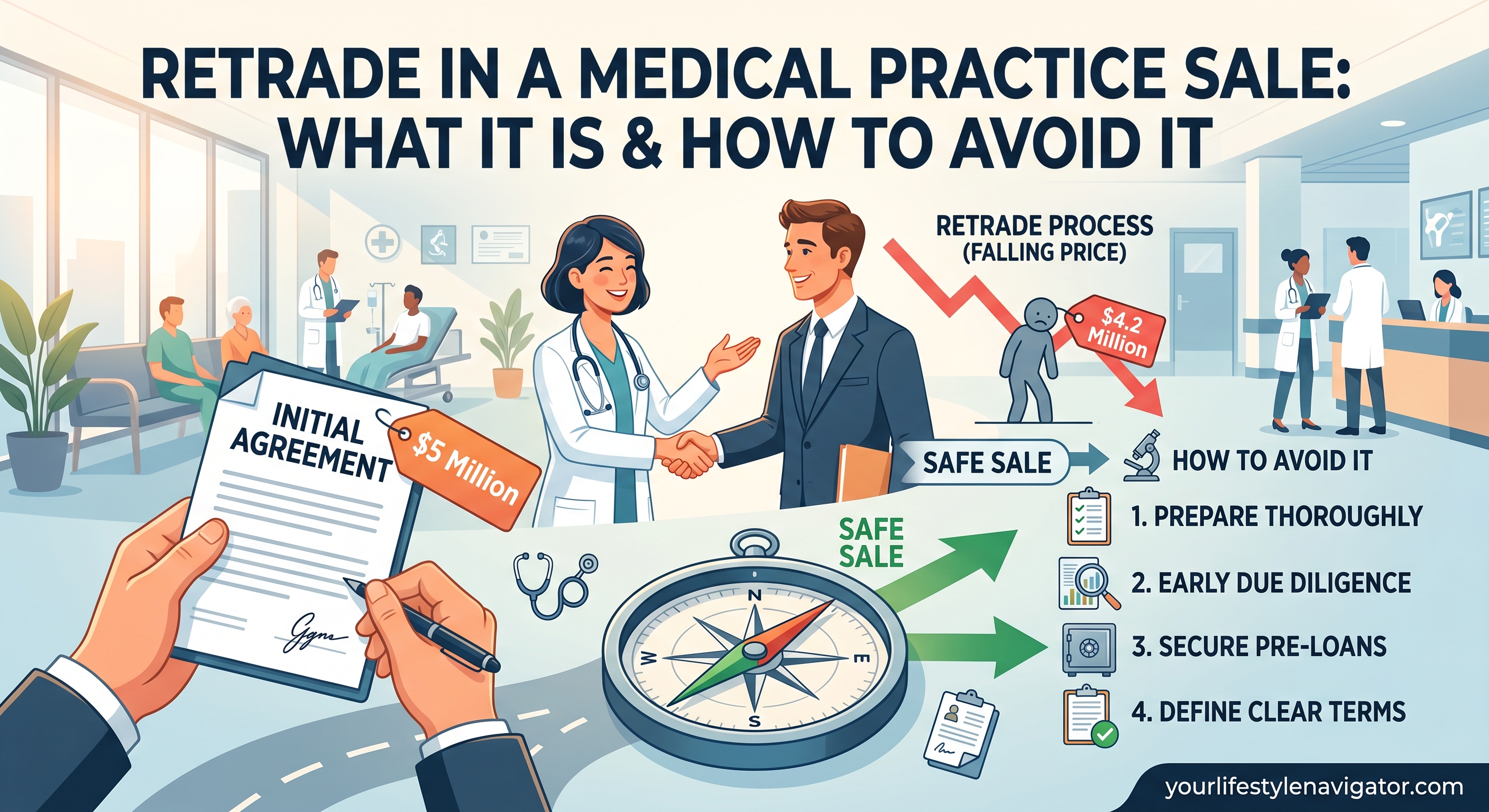
A buyer lowering their offer after due diligence is called a retrade. Here's why it happens in healthcare practice sales and how to prevent it.
What Is a Retrade in a Medical Practice Sale (and How Do You Avoid One)?
You signed a Letter of Intent. Weeks into due diligence, the buyer comes back with a lower number. Here's what a retrade actually is and how to reduce your risk.
The Problem: The Deal You Thought Was Done Suddenly Isn't
You agree on a price, go exclusive with one buyer, hand over months of records — and sometimes days before closing, the buyer comes back wanting less. This is a retrade, and it's common enough that every seller should understand it before signing an LOI, not after.
What Is a Retrade, Exactly?
A buyer who agreed to a price and terms — typically in a non-binding LOI — comes back during or after due diligence wanting to lower the price or change the structure. Because an LOI is by design non-binding on price, this is legally possible; it doesn't mean the deal is dead, but your leverage has weakened.
Why Retrades Happen More Often in Healthcare Practice Sales
- Coding and compliance findings during diligence.
- Provider dependency risk — revenue concentrated in one or two providers.
- Payer mix surprises uncovered mid-diligence.
- EBITDA normalization disputes — one of the most common legitimate triggers.
- Buyer-side changes unrelated to your practice.
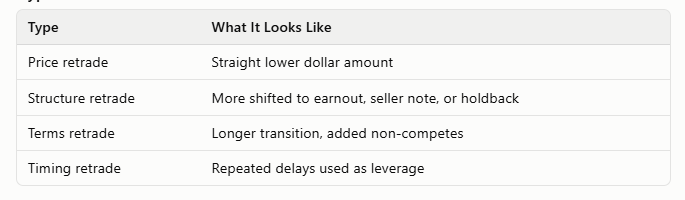
Types of Retrades
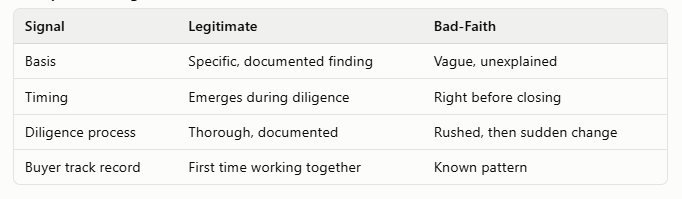
Comparison: Legitimate Retrade vs. Bad-Faith Retrade
Benefits of Understanding Retrade Risk Before You List
- Negotiate a stronger LOI from the start.
- Avoid single-buyer exposure with a real competitive process.
- Catch your own issues first — see our CPA guide on keeping sale-ready books.
- Protect your timeline and your sanity.
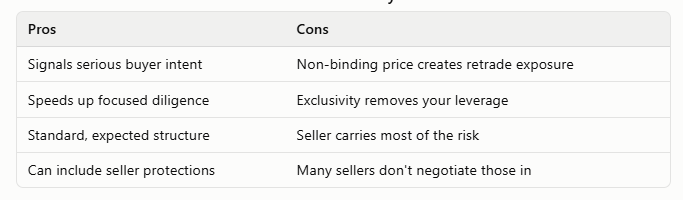
Pros and Cons of the Standard LOI-Then-Exclusivity Process
How to Reduce Your Risk of a Retrade
- Get financials audit-ready before you go to market.
- Run a real, even informal, competitive process.
- Negotiate a shorter exclusivity period.
- Include a break-up fee provision where possible.
- Do your own pre-diligence with your CPA and attorney.
- Vet the buyer's reputation.
Governing Framework: What's Actually Enforceable
A standard LOI is intentionally non-binding on price. What typically is binding are exclusivity, confidentiality, and sometimes a break-up fee, if explicitly drafted. The specific language matters more than the "non-binding" label — an attorney reviewing before you sign is the highest-leverage step.
Why Healthcare Business Owners Are Choosing Your Lifestyle Navigator
Retrade risk is a preparation problem. Through eXit Strategy and Transfer Legacy, John S. Smith Jr. works with healthcare entrepreneurs to build clean financials years ahead of a transaction — the same groundwork covered in The Exit-Ready Healthcare Business and Preparing Behavioral Healthcare Practice For Sale.
Frequently Asked Questions
Is a retrade illegal?
No — a standard LOI is non-binding on price, though it can breach specific binding provisions like exclusivity.
Can I walk away from a deal after a retrade?
Yes, in most cases — confirm against your specific LOI language with counsel.
What's the difference between a retrade and normal diligence negotiation?
Normal negotiation involves specific documented adjustments; a retrade is a broader renegotiation, often vaguely justified.
How common are retrades in healthcare practice sales?
No single published statistic, but advisors consistently describe them as common enough to plan for.
Should I get an attorney involved before signing an LOI?
Yes — protective provisions need to be negotiated into the LOI itself.
Conclusion
A retrade isn't a sign you did something wrong — it's a predictable risk sellers who prepare for it handle far better. If you're thinking about a future sale, book a NEXT Strategy Session with Your Lifestyle Navigator. If you're selling in the Maryland or Northern Virginia market specifically, read Healthcare Practice Exit Planning in Maryland & Northern Virginia next.
Related on Your Lifestyle Navigator: eXit Strategy · Transfer Legacy · CPA for Medical Practice
Get in touch with us on our social media platforms for more: