
Scaling
Practice Growth Consultant vs. Therapy Consultant: Explained
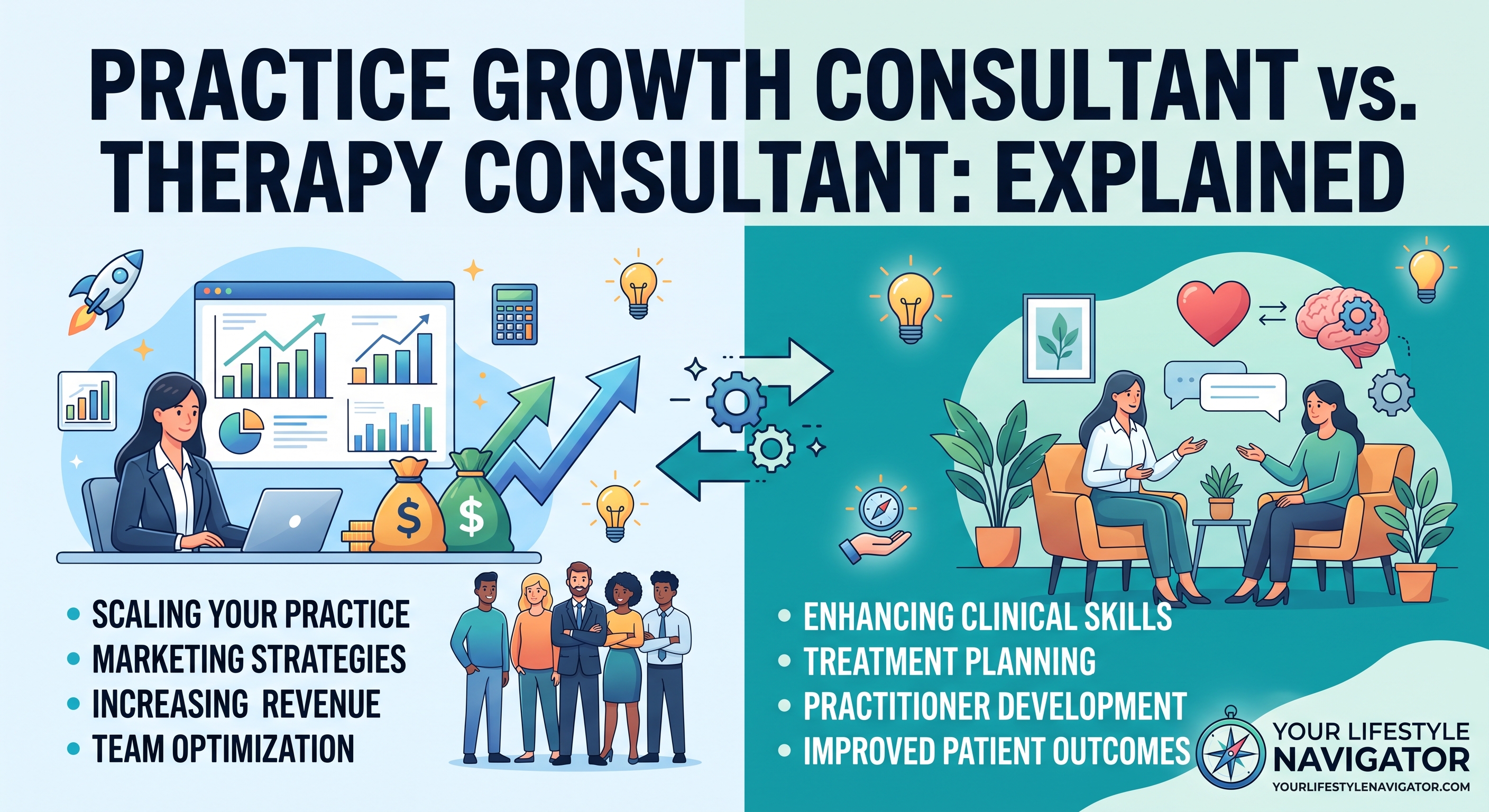
Practice growth consultant or therapy consultant — which one actually fits your goals? A clear breakdown before you spend your budget on either.
Practice Growth Consultant vs. Therapy Consultant: What's the Real Difference?
Both terms get used almost interchangeably online, but they usually mean different things — and picking the wrong one wastes months and real money.
The Problem: The Terminology Is Confusing, and the Wrong Choice Is Expensive
- You hire clinical supervision when you needed business strategy, or the reverse.
- Budget gets spent on generic coaching when the bottleneck is compensation structure or provider retention.
- "Consultant" gets used by everyone — no consistent way to compare outcomes.
- Owners struggle to know when a consultant is worth it at all.
Defining the Terms
A therapy consultant typically works with individual clinicians or small group practices on business fundamentals: rates, marketing, client acquisition, clinical-business hybrid support.
A practice growth consultant is broader, focused specifically on scaling — adding providers, adding locations, preparing the practice financially for growth or an eventual sale.
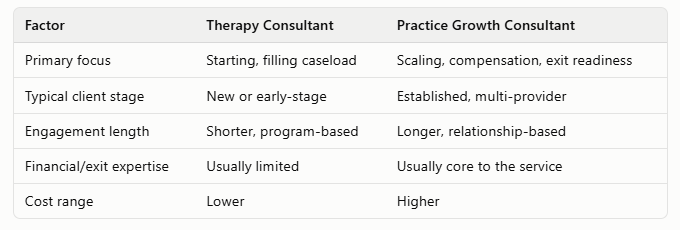
Therapy consultants skew toward starting and stabilizing; practice growth consultants skew toward scaling and exiting.
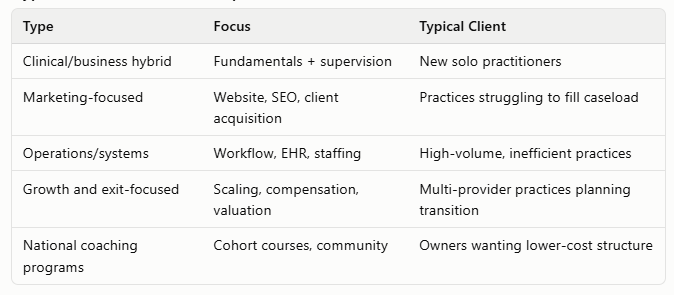
Types of Consultants in This Space
Comparison Table: Therapy Consultant vs. Practice Growth Consultant
Benefits of Getting the Right Fit
- Faster results — solving your real bottleneck.
- Better return on the fee.
- Less wasted time restarting with a second engagement.
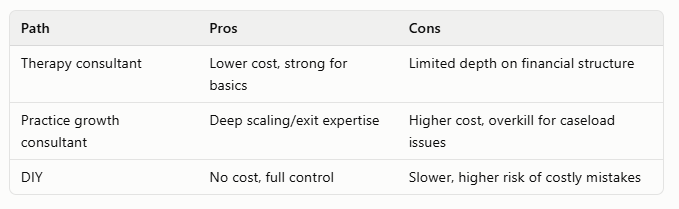
Pros and Cons of Each Path
How to Decide Which One You Need
- Write your actual bottleneck in one sentence.
- Check the consultant's track record on your specific problem.
- Ask directly whether they handle financial structure and exit planning.
- Compare cost against the size of the problem.
Governing Considerations: Licensing and Scope
Neither title is licensed or regulated. What is regulated is any clinical supervision component (state licensing boards) and any financial or investment advice (which should come from a licensed CPA, attorney, or financial advisor — see our CPA for Medical Practice guide).
Why Healthcare Business Owners Are Choosing Your Lifestyle Navigator
Your Lifestyle Navigator sits in the growth-and-exit category through Navigate Business Growth and eXit Strategy — for owners who've outgrown generic coaching. This is also the model explored in The Consult-for-Equity Model Explained.
Frequently Asked Questions
Is a practice consultant worth it for a solo practitioner starting out?
Often yes, for caseload, rate-setting, or basic setup — well-understood problems with established playbooks.
How is a practice growth consultant different from a business coach?
"Growth consultant" implies quantitative work — compensation modeling, valuation; "coach" implies mindset and accountability.
Can one consultant handle both early-stage and growth-stage needs?
Some can — ask about their experience at your specific current stage.
Do I need a separate financial advisor if I hire a growth consultant?
Often they coordinate with your CPA and attorney rather than replace them.
What questions should I ask before hiring either type?
Specific examples at your stage, how they handle financial structure, typical cost and timeline.
Conclusion
Getting the therapy-consultant-vs-growth-consultant match wrong costs real time and money. If your practice has outgrown early-stage coaching, book a NEXT Strategy Session with Your Lifestyle Navigator. For the compensation math behind scaling, revisit our RVU calculator guide.
Related on Your Lifestyle Navigator: Navigate Business Growth · eXit Strategy · CPA for Medical Practice
Get in touch with us on our social media platforms for more: